
The brand leader as Firestarter.
This article appeared in

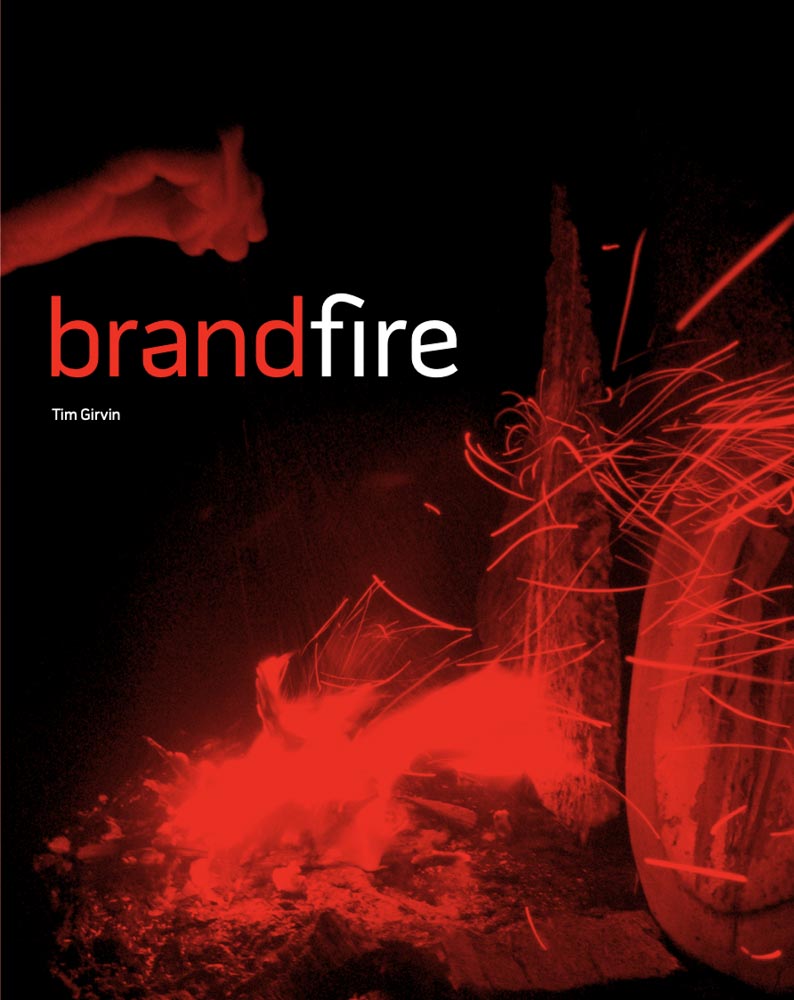
What beats within the heart of the brand, its leadership, the foundations of its origination?
As a brand building community of strategists, designers and those innovators that we serve, we live and work in these confusing—and confounding—times that we all experience in each of the ruptures such chaos crackles. It’s apropos to be thinking about our contributions. It’s—for all of us—an inquiry into the nature of our work in a different manner. Time to look into our own hearts, actions and what lies beneath and within.
I presume strategic intention in instinct, in any forward movement, and in this, the practice of brand development is never about what’s on the surface alone, but more to what lies within—the heartbeat—the pulsing circulatory system of messages, imagery and reflective replies.
Some speak of brand DNA, and that chromosomal notion is far truer than we might surmise. In our experience working with brand leaders—leaning-in and listening—and guiding outcomes and directions,
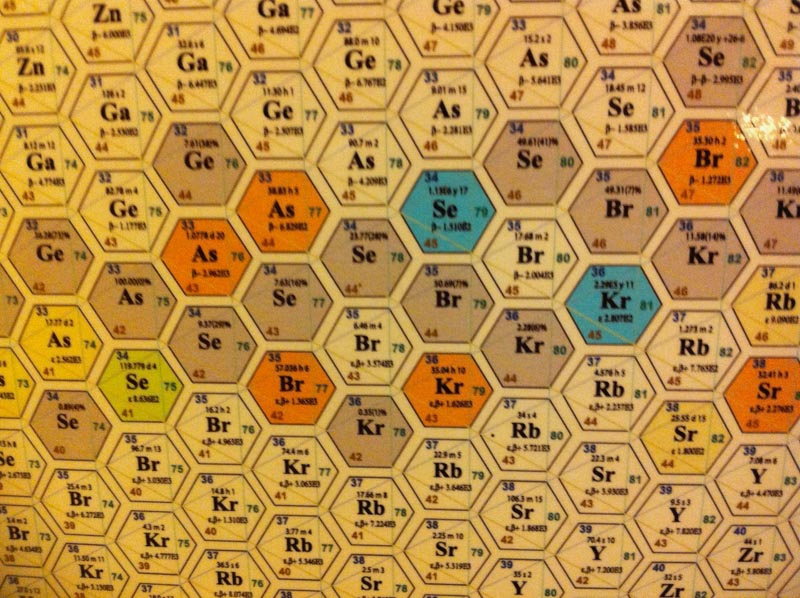
there is a kind of table of elements—a coding of structure that defines experientiality.
Palette, holistic style, the realm of the senses and the messages that reach-out to community. It’s a powerful construct and one that we could use as a force for good, for betterment, for beauty and justice—turning the heads of people to a new learning, insight and compass[ion].
The legacy of any design decision lies in historical experience—it is about the story of what has been, what story might be told now, and how that story could extend to the future. For each of us, exploring the idea of design might be to the link of the signature—the “signing” of a solution in the original use of the word. For every design might be just that, regardless of the transparency of interpretation: it is a filtration of personal spirit and character.
Brands are personal—they’re made by a person, and they’re made for people.
In reaching into the heart of the translation of design, the center of a relationship—the challenge of finding a solution that is a sign. The spirit of the designer drafts the signature that will be seen.
Like this signature treatment we designed for writer, producer and director James Toback [Exposed] that we show as an reference, literally, to the brand link between a narrative ideal and the signing of its revelation.
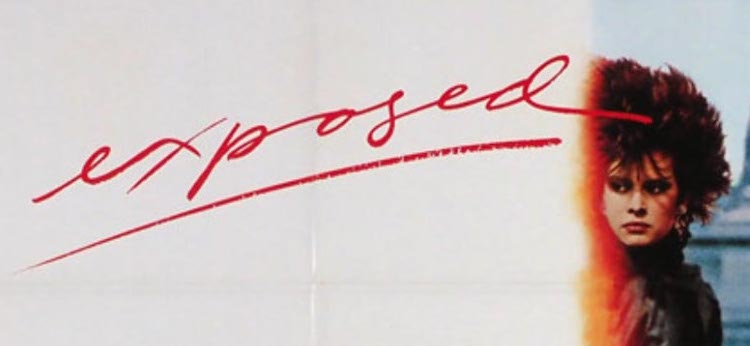
That’s where we work, the signature line between the idea, the ideal and the signing made to your community.
Anyone committed to the ethos of creativity will reach into the soul of experience, and expertise, to bring forth something that is profound in the power of solution. That sense of soul driving the path to the answer will be about passion. And the nature of the etymology of brand, as we’ve consistently pointed out, speaks to fire—getting back to the head of this blog—5000 years ago, at the birth of the “sound” of the voicing of “brand” it was all about fire.
Passion as connectedness, brands can burn bright, and create uplift. Like this Metro NYC reference—something bettering—a hopeful moment for every rider in the subway. An art message as brand.

Over time, working with hundreds of remarkable people, there are certain characteristics that emerge.
Passion is fire. Passion is pain. Passion is empathy—and in approaching passion, and leadership, and branding, it lies in the reaching into the heart of a relationship, to a problem, an idea, a question that is holistically embraced.
That sense of embrace will mean more to the sentiment of captivation, being consistently driven to get closer to the flame of the challenge that is set, to seek the exhilarating freedom of the ideal response.
But that response will always be tinted by the person that creates that answer. Surely, in any design problem, there will be consistency in understanding the issues at stake, the nature of the question, the character of the audience, who’s listening to the story — but always, in the end, the spirit of the finding the actual signature of the outcome will be touched by personality. The hand draws from the soul.
That idea of fire is a compelling patterning in my experience, working with leaders from around the world — who, in that game, is really in it? Who is really entranced by the problem that needs to be seen, in scene, and newly discovered. The person in front — the one who leads — needs to be inflamed with that sense of profound and continuing commitment to explore the nature of the pathway to the design answer, but as well, what lies beneath that exploration of discovering. Every answer yields another question — and then another answer. As a person that focuses on the brand as a form of communicating to relationships, the ideal leader is one that touches and contemplates every detail of that resolution; it’s not the glancing overview, but the details that make this approach to enterprise memorable.
The etymology of brand and fire
In just about any exploration, looking for meaning, I study the word, beneath the word, behind the word — and the world of its use that lies before.
What about brand? Looking back, to brand, and the legacy of fire. These references go back in time—from the most recent, to backwards, to the seed sounds of the beginning.
Contemplate the foundational sounds of words, the so-called PIE roots, that we use today—a mysterious intermingling of the sounds of newly found meaning and import—5000 years ago.
Old English—brand, brond “fire, flame; firebrand, piece of burning wood, torch,” and (a poetic reference) “sword,” from P.Gmc. *brandaz (cf. O.N. brandr, O.H.G. brant, O.Fris. brond “firebrand, blade of a sword,” Ger. brand “fire”), from evolved base *bran-/*bren-. from PIE root *gwher-“to heat, warm.”
Meaning of “identifying mark made by a hot iron” (1550s) broadened 1827 to “a particular make of goods.” Brand name is from 1922. As a verb, brand is attested from c.1400. Related, of course: branded; branding.
And to fire, there’s an additional word expansion as in: burn—what are the links, there?

The 12th century, combination of Old Norse, brenna “to burn, light,” and two originally distinct Old English verbs: bærnan “to kindle” (transitive) and beornan “to be on fire” (intransitive), both from Proto Germanic *brennan, *branajan (cf. Middle Dutch bernen, Dutch branden, Old High German brinnan, German brennen, Gothic brannjan), perhaps from the Proto Indo European *gwher- “to heat, warm” (see warm), or from PIE *bhre-n-u, from base *bhreue- “to boil forth, well up” (see brew). Related: Burned; burning. Figuratively (of passions, battle, etc.) in Old English meaning “cheat, swindle, victimize” is first attested 1650s. As a noun, from 1520s.
To think about the concept of brand, it’s important to toss out the conventional definition of what that trapping means—the current parlance today, and go beneath, into the primordial history of words.
Brand, the word, is first spoken at least 5,000 years ago—its etymology is embedded deep in the roots of Indo European language—and there, in the beginning, the spirit of the word is fire. The translation of this expression really only found its home in the west during the last millennium, first scribed in a monastery off the coast of Scotland, a refuge from the battery of that tumultuous time.

The Lindisfarne Monastery | Photographed by Chris Combe from York, UK, CC BY 2.0, via Wikimedia Commons
_(15064111624).jpg)
In working on brands, my work is always with the leadership of that brand—and in that entwining, the idea of brand and the human spirit that lies in the heart of it— there is a kind of genetic mingling. We call that, in our work, the human brand. And in most of the powerful brand stories that are attached to the presentation of design as a key ethos of value, the human leadership is the fire that burns at the soul of that encounter.
Passionate leadership in design: Steve Jobs and Tom Ford
There’s a blessing in the work that I do—because it’s all about being intimately linked to another person—that might be a single individual, or a leader, or a team. But really, design—and the fire of the brand—is about distinctly human connections.
In the early days of my career, and then successively afterwards, I was exposed, firsthand, to Steve Jobs—
working under his direction at Apple.
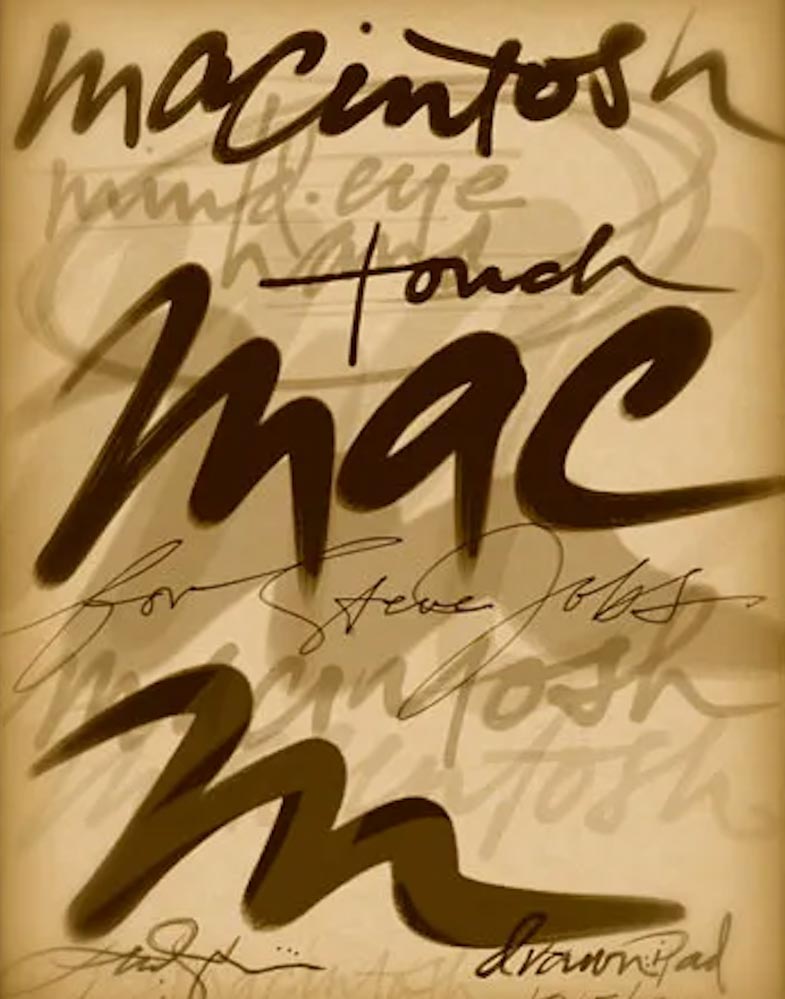
While some of the team then defined Steve as a “terrorist,” for me that opening encounter was about passion—and the fire of the details in getting things right, down to the microscopic shading of a industrial design detail, the form language of a returning curve of an object, a screen interface, or the touch of handcrafted typography. That initial encounter lead to others at Apple in which the same passion—the fire of the brand, that sparks and ignites that inspiration—is voiced in everything. You are either part of the flame, or you are extinguished by it.
So too, in speaking with designer Tom Ford—a man in which every detail of the Tom Ford brand has a sense of the touch of his passionate fire.
He designs to create what he doesn’t see in the market—and what he wants to see in the market. He designs, literally, for himself. That fire is a blazing trail—a signature. And finding that opening, the obsession to create, is something that continuously empowers every decision of experience.
Anyone who works at Apple, or at Tom Ford, or any culture of brandfire, will tell you the selfsame truth—the power of the brand story is about that fire of a incendiary signature; each touch—a gesture of flame.
Life is short–you’re inherently linked to what you’re doing,
or you’re detached, disconnected. The moment counts. And the momentum continues.
Tim | Queen Anne Studios | Seattle
Another quest for fire.
Discover more from Girvin | Strategic Branding & Design
Subscribe to get the latest posts sent to your email.