

Creating environments with brand language and narrative patterning built into the experience design strategy.
What if there was an intention to create a pattern language that could guide consumers, and renovate a retail environment? And, while you’re at it, simplify guest movement and sales engagement? Eliminate excess furniture, simplify customer pathways, and accomplish these with the store fully operational—and in three months, at 25% of the cost of a normal renovation program?
Such was the case in our build-out of a patterning language in a succession of Nordstrom stores, starting with a study in brass screed patterning and metaphorical design thinking in a newly invented “woven warp and weft” screed array in the newly renovated floors of store one, Seattle flagship, downtown Nordstrom. That line of thinking was taken to Chicago and finally implemented in a dynamic renovation strategy for Nordstrom Irvine.
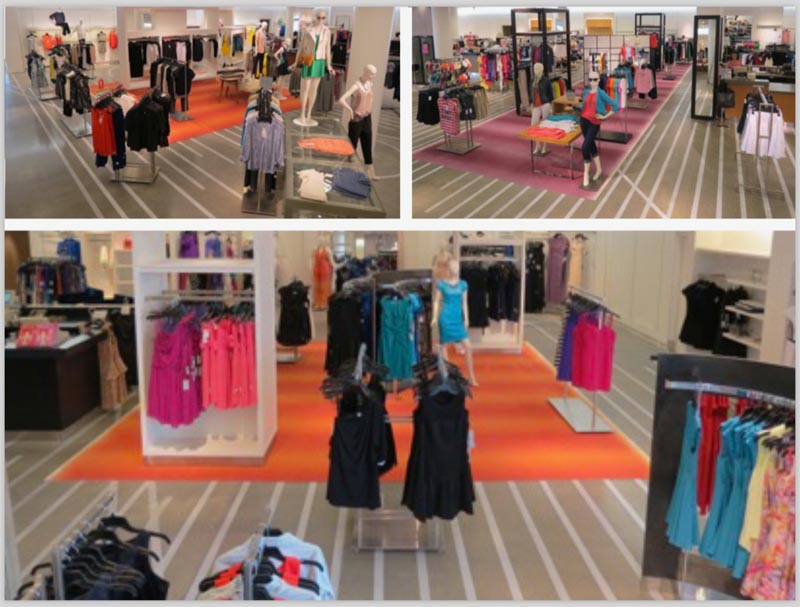
In that application—the LA renovation—the carpeting and tiles were removed to the polished concrete substructure and the deployed strategy and design played towards a pathway metaphor that was applied in a manner to accentuate guest journey. While this was an inexpensive renovation, its goal was to create a route-making expression that created shopper trails without creating guest blockades or guest / salespeople impediments. It was widely defined as strikingly successful. Customers were enchanted and store managers were delighted with the store still being operational during much of the renovation process.
The sequencing of this experiential design patterning maps into this cartography of approach:
NORDSTROM BRAND PATTERNING | IRVINE
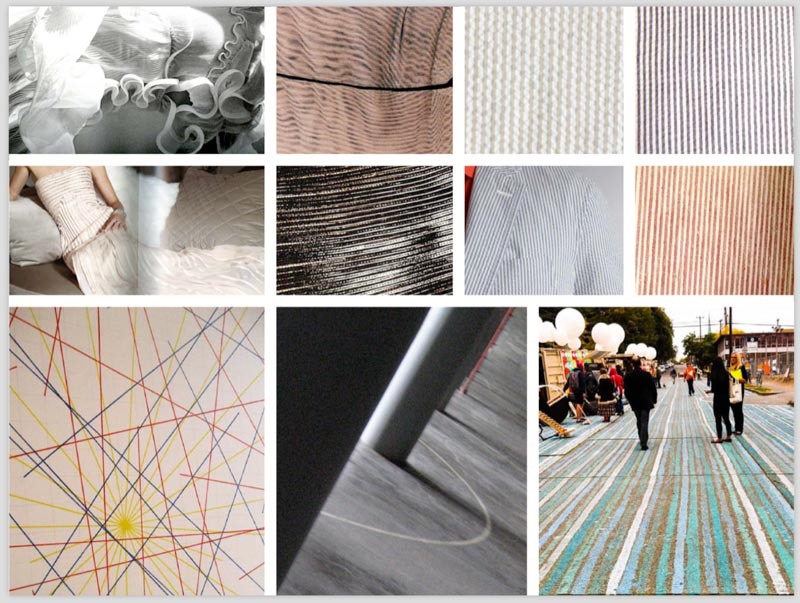
Referential allegory—explorations and the final allegory: the tailor’s chalkline:
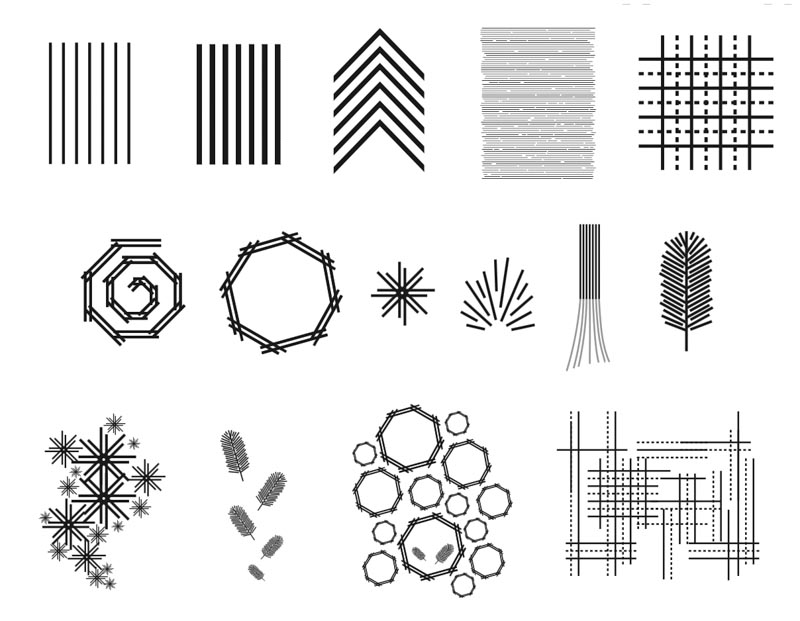
Possible cartographic patterning visual linguistics:
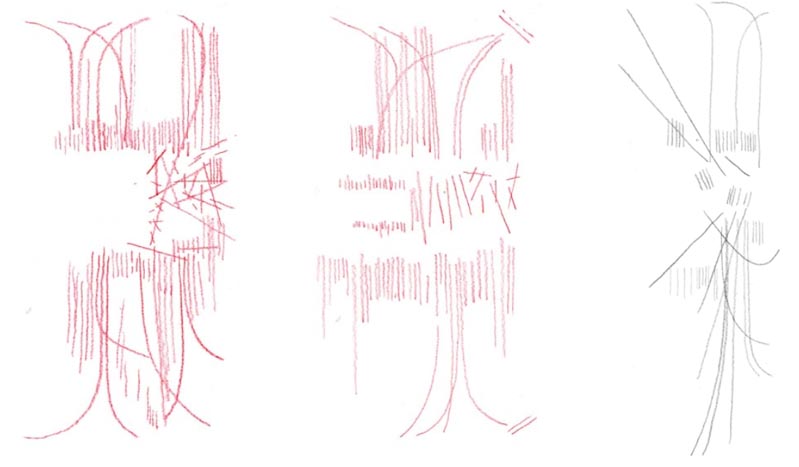
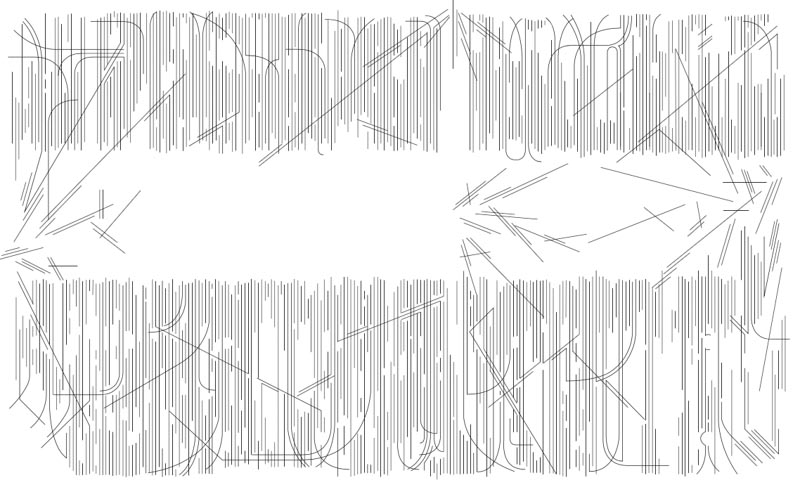
Trial floor arrays and conceptual mapping and pathway sketches:
The floor plan, Irvine:
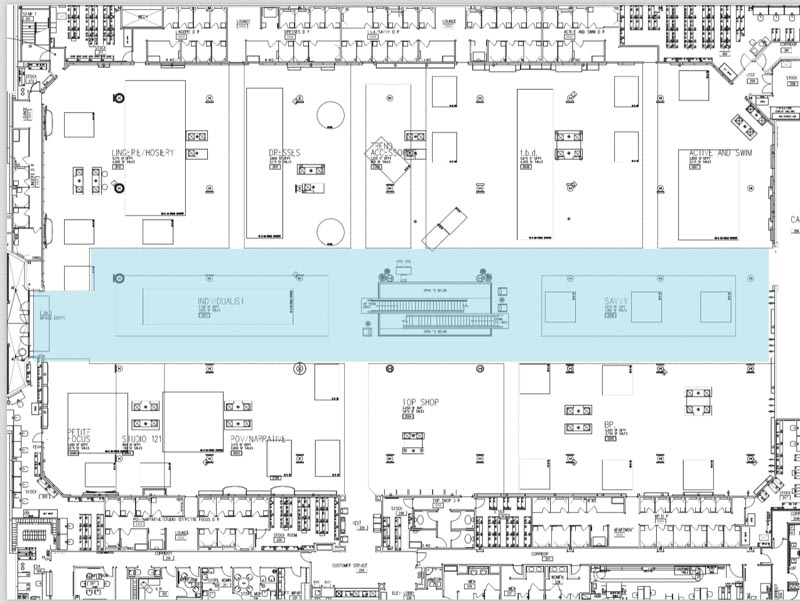
Penciled sketches as a planning overlay:
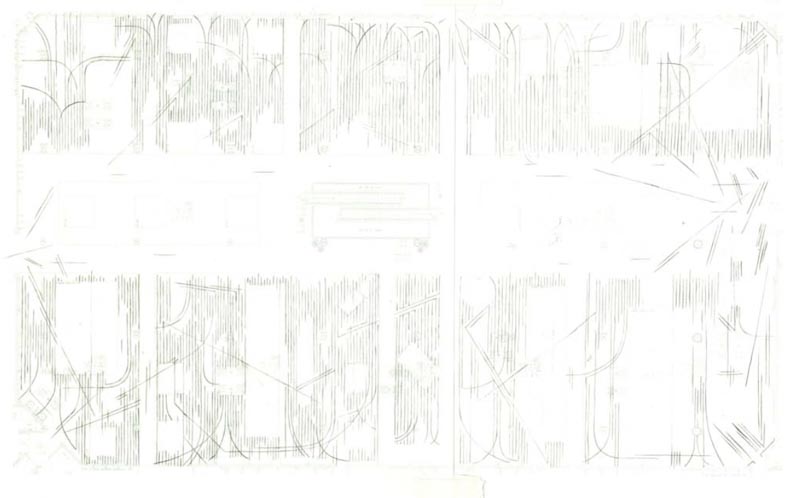
The digital redrafting—patterning, pathways, pillars in the illustration of an idea:
Explorations of texture and trial painting applications:
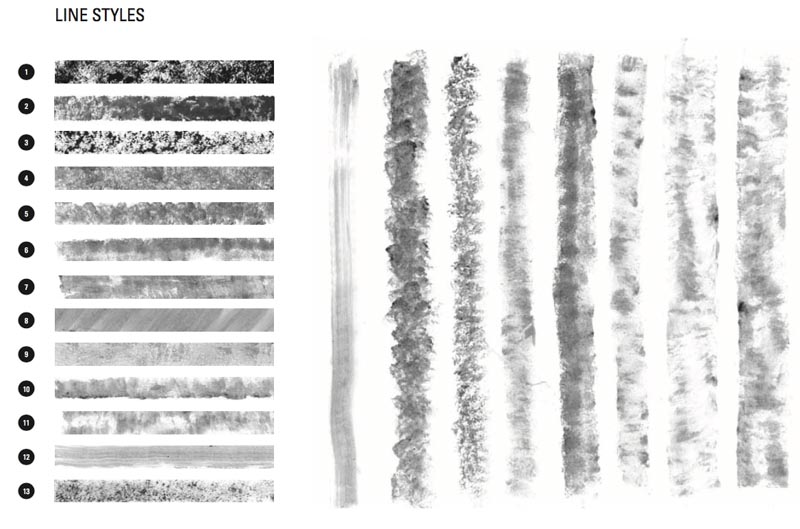
Concrete painting trials:
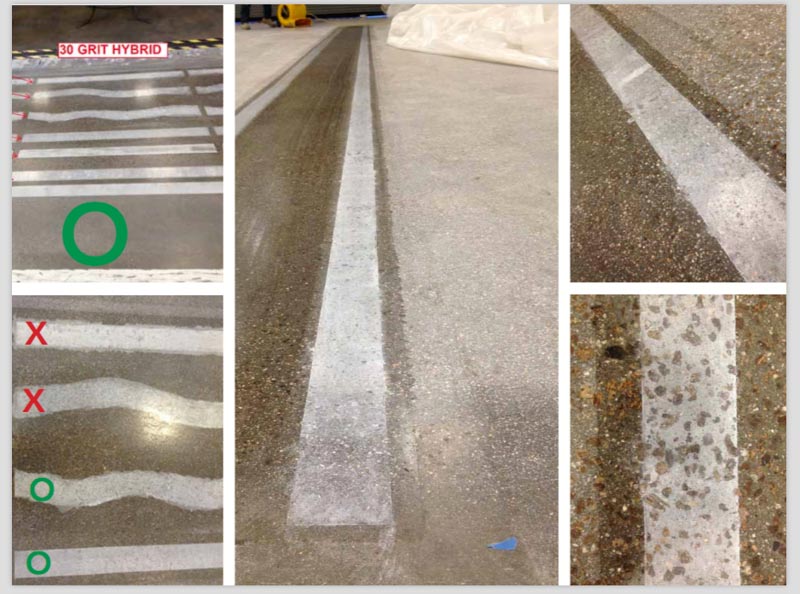
Masking of final array pathways:
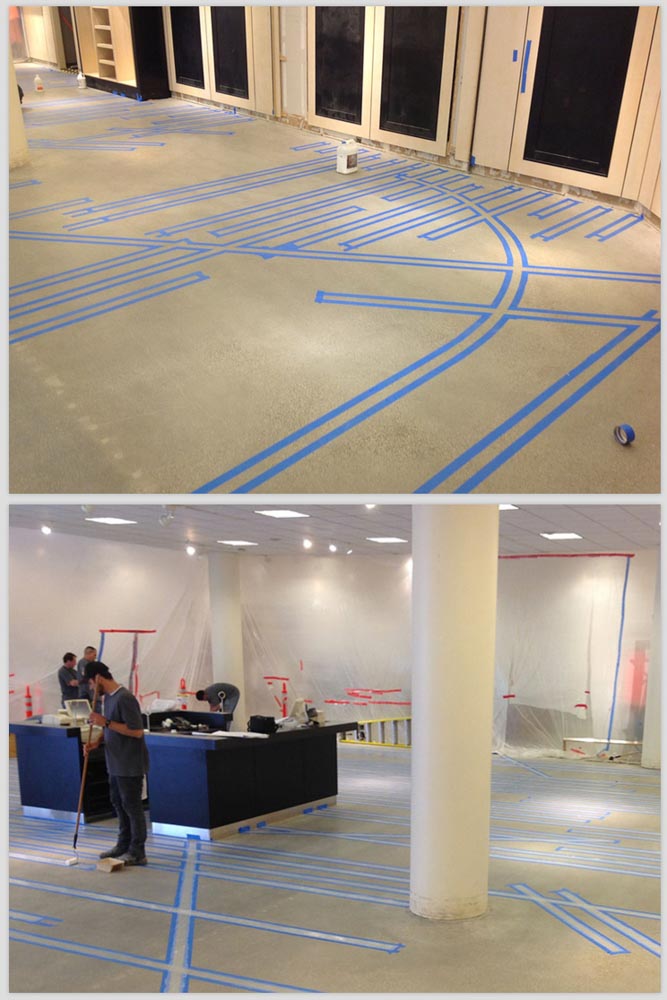
Final floor treatments
WHAT WE KNOW | EXPERIENCE DESIGN DETAILING: SENSATIONALISM AND MINUTIAE
Guests experience details. They notice the large sweeping gestures—but, in our experience in interviewing visitors—they recall the delicately displayed treatments. From our Disney interviews: “I remember how the carpets matched the journal’s icons, and how the signs explained how to get to the right place—it all fit together.”
Here, Irvine? A line of discussion, project review, Galen Dolstad, Retail architecture team leader, Nordstrom:
“This was like a guidance system that wasn’t—it showed a way. But it was playful and fun. It created a graphical energy that was uplifting. While we knew there was a renovation that happened, it kind of created a crisp vibration that broke down conventional barriers. It was freeing, since there was energy and rhythm in the lines—and they were like chalk-lines, which called to mind the spirit of bespoke tailoring. Which is a Nordstrom thing—perfect for me, perfect for you—well-made and just right.”
PATTERNING LANGUAGE AND INSPIRATION
I was walking the forest around my studio, looking at its pattern language — the light, the array of the trees, the patterning of light-lines on the forest floor, the tread of footprints in the shadowed light of sand dunes, grass patterning and the waved rippling of grained crystals.
It’s all a pattern, isn’t it?

And, as designers—and those shown and explored below—the inspirations of the natural realm.
These are points of catalysis, that invent ways to look into
the heart of brand, and soul-searching the deeper place of meaning.
And, to illustrate that psychic framing: working in preparation, creating design vocabularies, messages and
deep metaphors to build out a patterning language.
It’s the small things that show up as meaningfully memorable.
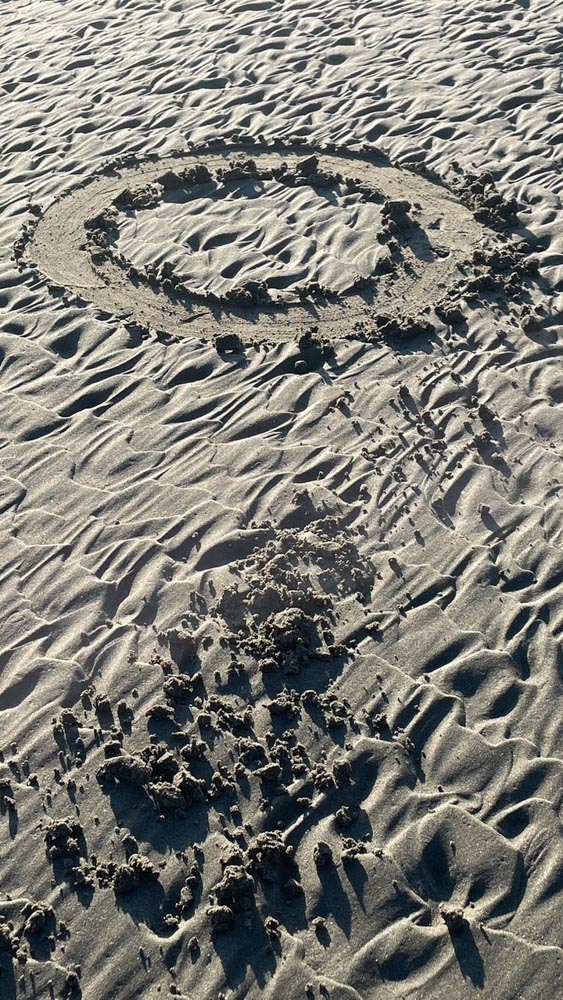
Nature has her own story, which can be a founding guide to direction for thinking about brand patterning, allegory and deep brand space. Her patterns fill place, they flow out, occupy light-bound areas. She seeks the light and responds to it. In a manner, the examinations below do the same thing—they refract and pinhole the shadowing of light as a perforation or reflection of luminous movement.

Would it be possible to consider the framing of patterns as
a layering to storytelling brand and experience design?
Surely.
Brand Storytelling, patterning and experience expression
There are patterns in storytelling—the rise and fall of characterizations, the landscape of narrative—the where, the how, the what—the riffing of the storyline—the plot journey, the character of suspense, emotionality, relevance and impact. And there are patterning expressions that can be found in the placement of stories in the context of actual environments—symbolic legacies, iconic references, mythic and legendary implications, persona and attributes of the heart, soulfulness and magic, mystery and wonder.
It’s been an obsession with GIRVIN to explore the concepts of brand development and patterning in place-making. And it’s something, as well, that GIRVIN has been involved with for years. Ranging from simple shopfronts and graphic programs to design systems of substantially larger detail and scale. From quick restaurant skin/exterior design programs to Asian department stores of a significantly enlarged order.
Brandplaces
But the key challenge in this exploration is the concept of how a brand manifests itself in meaningful place creation. Any brand, in the acknowledgment of an interior design scheme needs to consider how, and why, a participant in the place will recognize that sense of presence.
Presence, in place, is the balance between intentional experience and experiencer attention—
if the intention is fully realized, then a participant will fully recognize “where they are.”
In walking the streets of San Francisco, working there recently, I was studying some examples of place-making and thematic brand implications in retail design. In the past, in two instances, in working with the team at Gucci | YSL, I’d linked to the design leader that was postulating the current design intentions of the evolution of the Gucci brand.
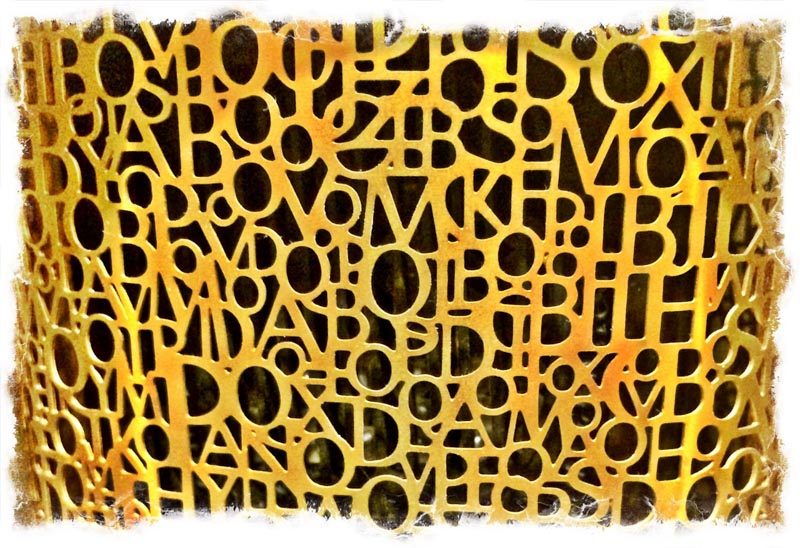
The overarching strategy was created by the design and creative director, Frida Giannini. and noted earlier at the launch of the new concept on 5th Avenue, NYC. The new store is just blocks south of another powerful retail presence, the opening strategy of Apple, also studied in an earlier photographic walk through. Interestingly enough, given the spectacularly powerful use of transparency in the design strategy of Apple’s first store in NYC,

so too does Gucci consider the concept of transparency as part of their brand messaging. These components find themselves empowered in the vision of James Carpenter and his team — a group of architects, designers and engineers exploring glass, metal, fenestration and the visual story of light and refraction. Notes on his work here.
It was Carpenter’s involvement, in particular, that lent, to Gucci, the concept of a uniquely formed glass cladding that evinced the character and rich lustre of the brand messaging and retail strategy. And Carpenter’s genius is in light.
There’s a current story of course that we worked on—as signage consultants in the overarching sign identity program for all North American Nordstrom stores,
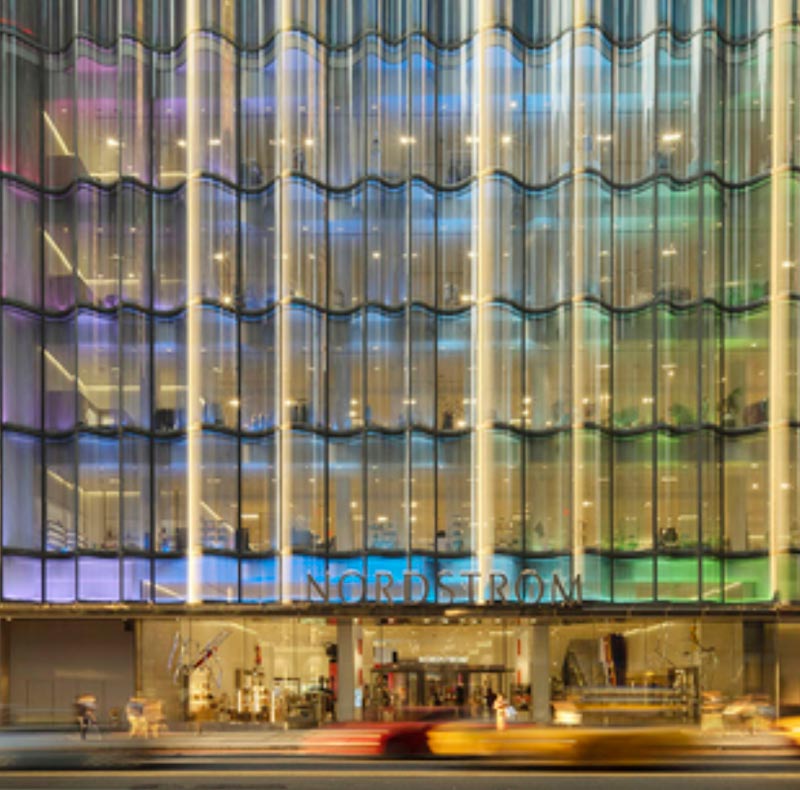
in the context of Nordstrom, particularly the NYC Flagship.
And that story is about light.
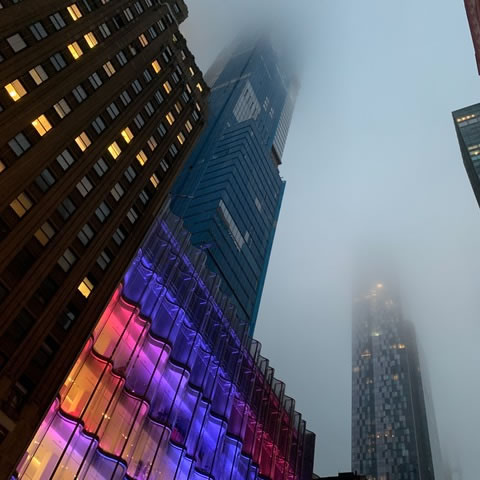
Back to Gucci—and Tokyo, you can see, in these photographs below by Dawn Clark, AIA LEED AP, some of the imagery of the system, as well as in the James Carpenter, specially-created glass that finds itself in an exterior expression.
It’s transparent, luminous, transportive—and sensually, it’s touchable.
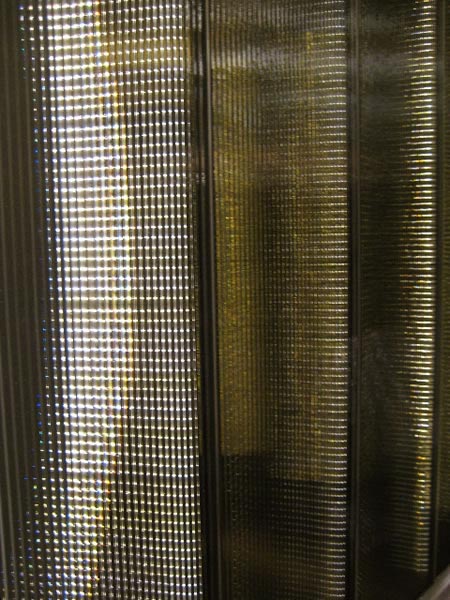
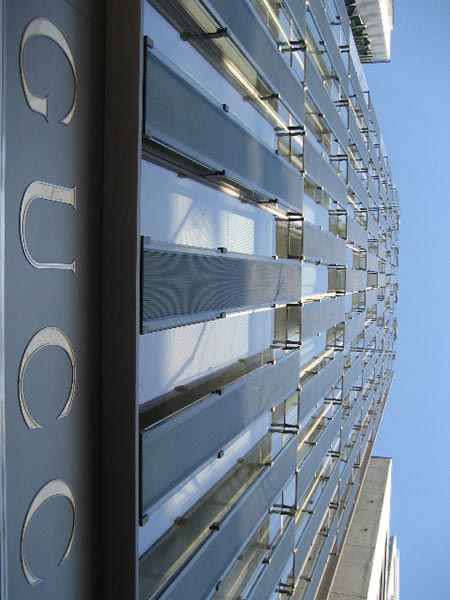
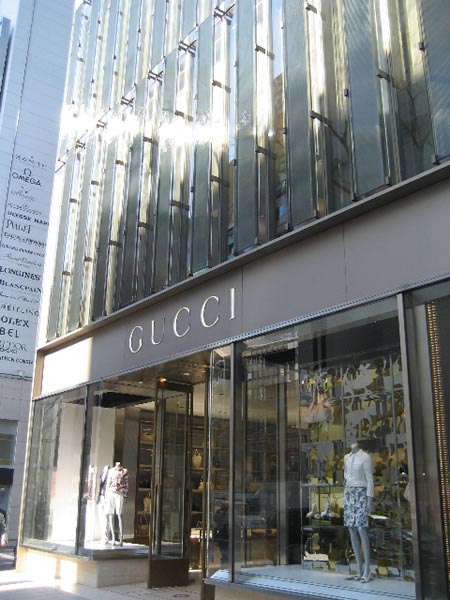
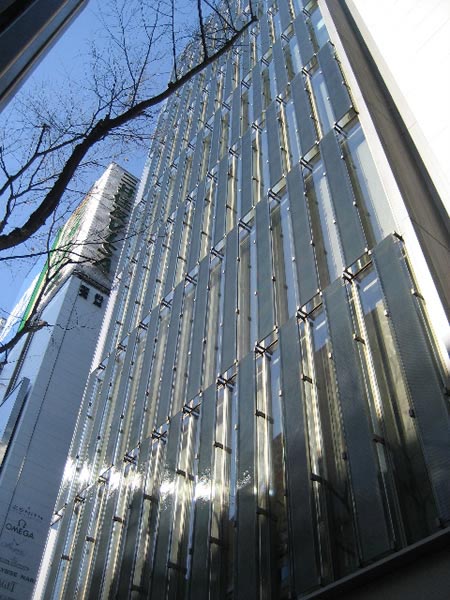
While it’s not perfectly evident in these images, the rainbowed luminosity of the treatment, the idea of the concept of light refractivity and
reflective effects are part of the vocabulary of the brand—and even in alternate arrangements,
other shop exteriors and interiors, this strategy is carried through.
How do brand experiencers see, sense, a place?
In examining the idea of brand in relationship to comprehension, it might be said that the key principle is looking into the heart of the brand to the components that are actually meaningful. That is: with an experiencer, what’s the relation emotionally to the brand in terms of recognizable visual language? Could be touch, sensation,

The G monogram is an iconic positioning element. A gesture to this would be the use of gold, the patterning of some of the product offerings—like woven fabric that is rhythmically expressing the brand—as well as signing and other details that might mimetically reference the brand conditions and attitude.
During a San Francisco client meeting, I wandered the neighborhood, these treatments evince Gucci’s branded essence—the conjoined G’s and the use of warm metals: gold being a more relevant materiality than, for example, silver or steel.
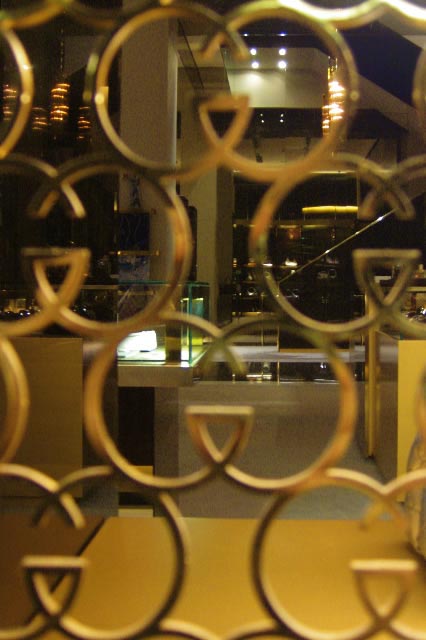

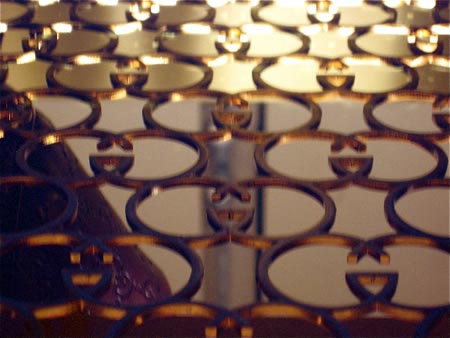
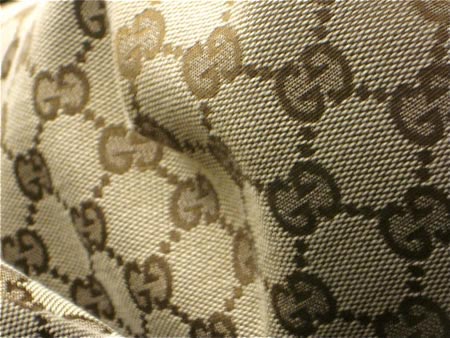
The brand patterning strategy—in the link to the opening flagship Tokyo retail launch of Gucci — and the explication of the work of James Carpenter’s team could be found in the use of ribbed glass-work cladding for the skin of the structure and the role this gesture to the interiors, as well. The rippled glass, the sense of layered transparency, the patterning of the brand—whether signed, incised or sheathed in the opacity of frosted skins—it’s all saying something. It’s something to see, sense and touch.
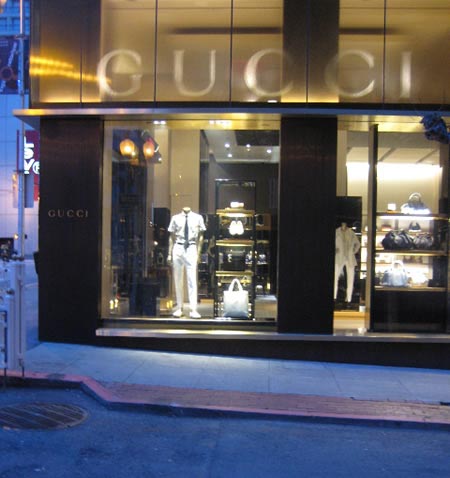
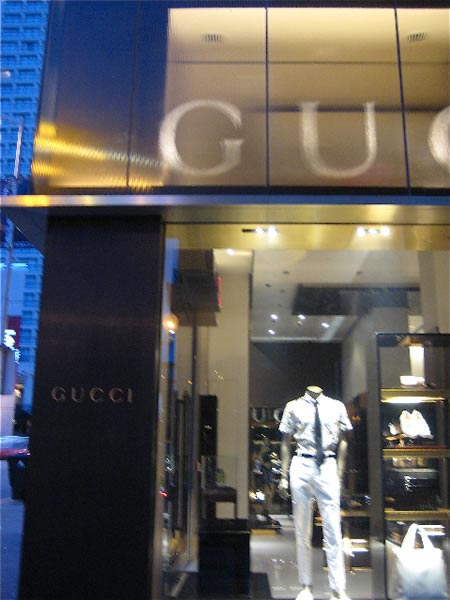


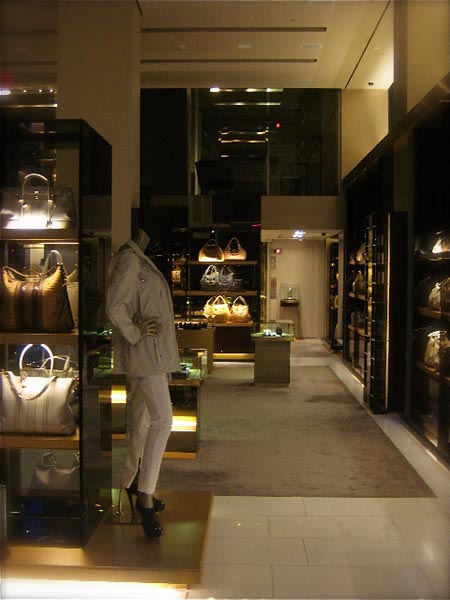
Gucci brand: That sense of recallable distinction isn’t easily had. Walking to other stores in the neighborhood and exploring their sense of brand experience management lends lessened attention to the idea that every detail counts—especially in the presumptions of luxury experience design.
Another lesson in brand management of patterning and visible language might be found in the spirit of DeBeers new installation. Yet, while the character of the brand is widely known, it’s not clear what the mnemonic character of the patterning and how that might be recollected by a guest.
It’s one thing to be decorative, it’s another to be memorable in the particular indices of how consumers will relate to the brand. What’s the story and how is it visualized? Finding a code that will resonate is essential — and it’s never about the stylish graphics alone, but of the symbolism of the effort and how that would be perceived psychically in the meandering mind of the customer. It’s not that people aren’t looking, it’s that they might not know what they’re looking at. That doesn’t presuppose that people won’t get it — but for the embrace of a brand, the idea is there are familiarities that are subtly implicated to expand and deepen the richness of the experience.
What symbolism, then, might be suggested in these treatments?
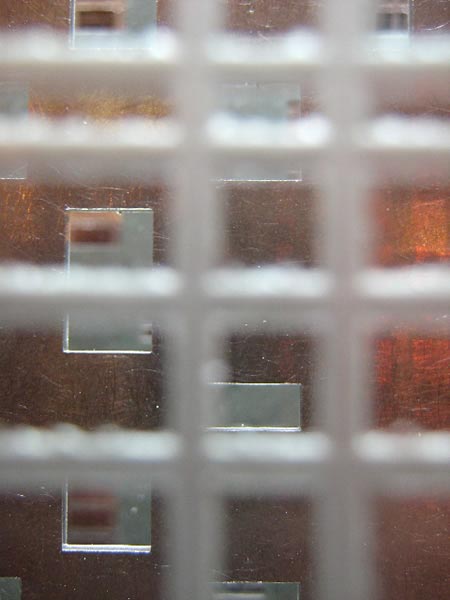
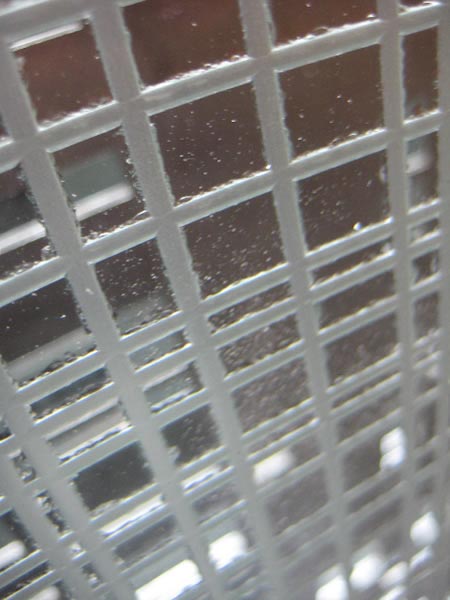
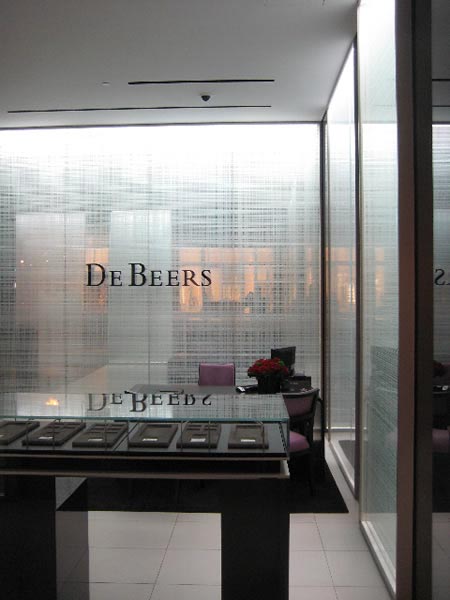
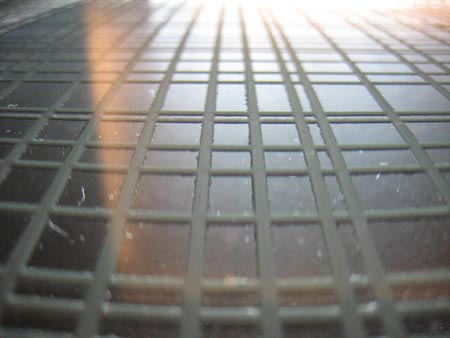
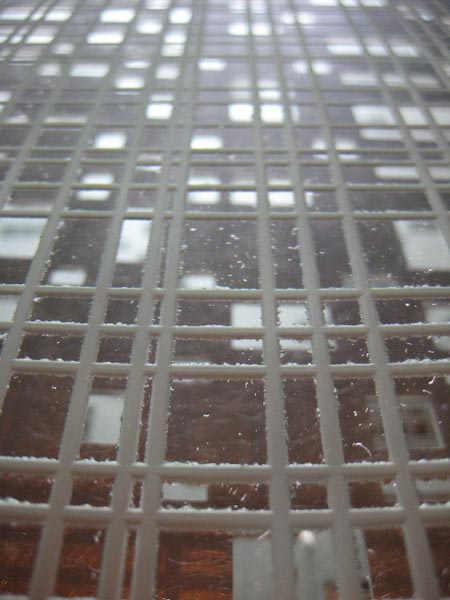
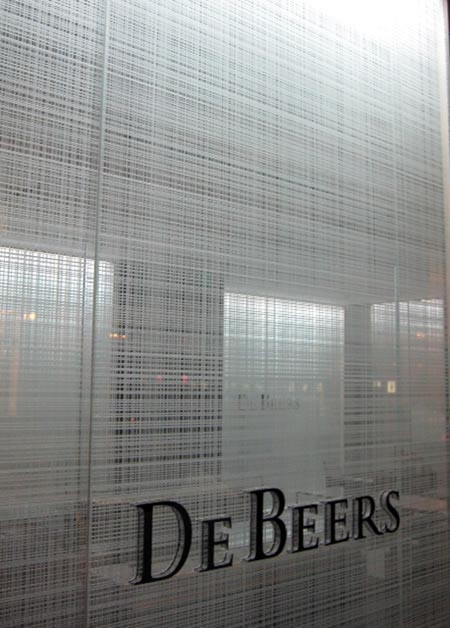
Sandblasting cross-layered rules as a gesture to diamond cutting?
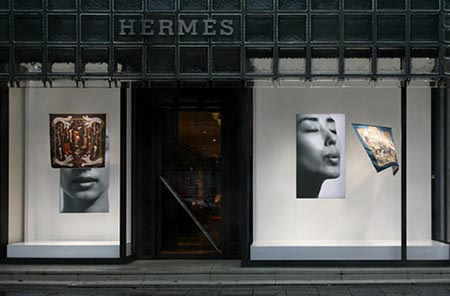
MERCHANDISING BRANDCODE®
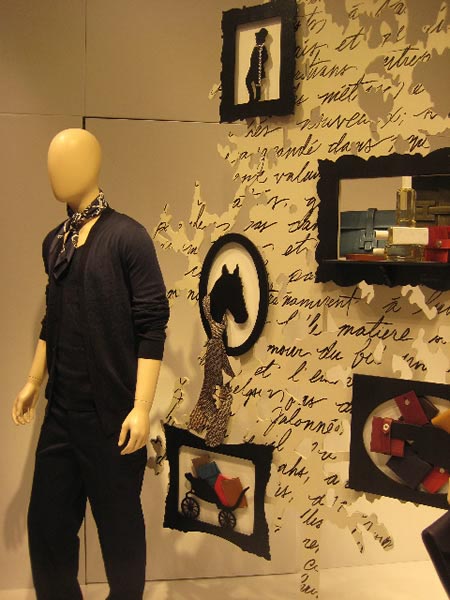
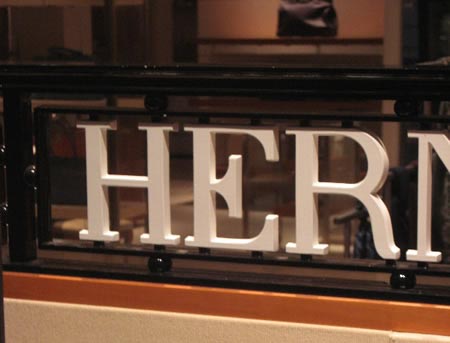
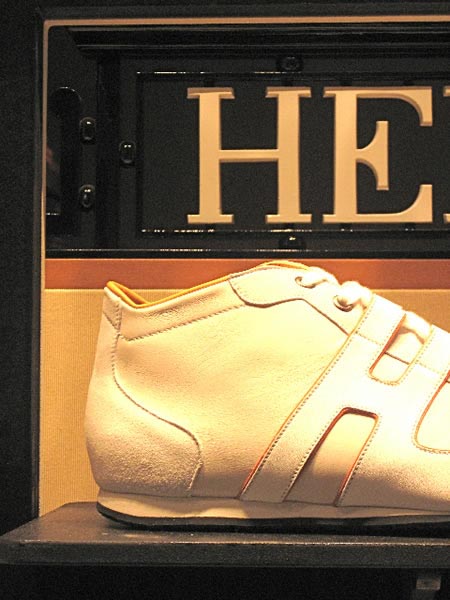
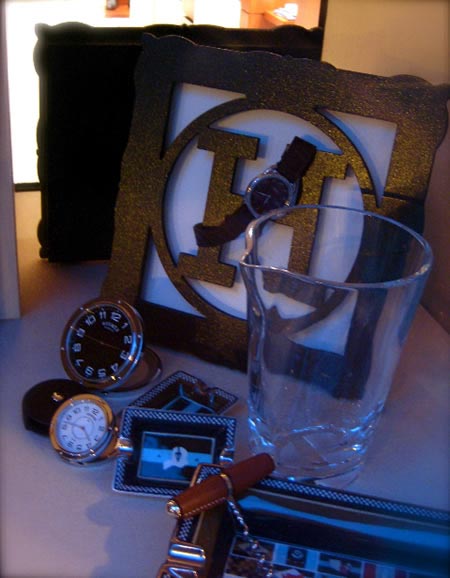
I believe, as well, that coding the brand—in retail presence—can take components from merchandising and bring them back to brand. The implications of the legacy of Hermés as a saddlery and equestrian outfitter lend themselves to the notion of taking the “tack” of merchandising framing—in this instance, literally: framing.
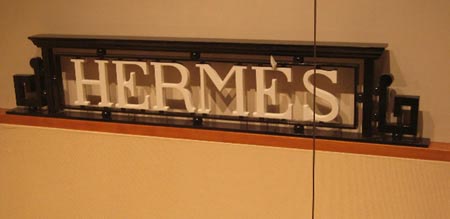
Framing that comes from the styling of equine equipage, as well as their stylistic expressions. I shot these in San Francisco, just down the block from Gucci and DeBeers.
The horse legacy:
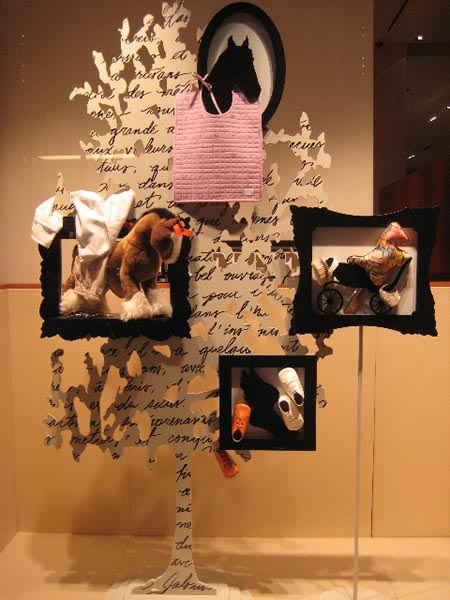
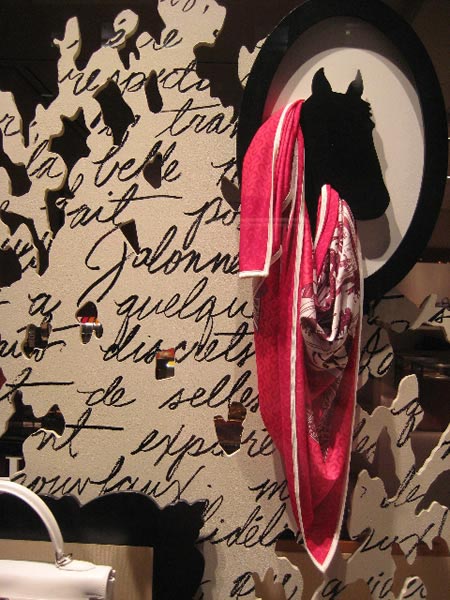
Framing signage:
Pattern or decoration?
There’s another conceptual string, to the notion of this exploration—the use of patterning as a detail that supports the creation of place, but the adaptive character of that expression as a link to the larger conceptual thread of experience design. Architects are not wont to call their work — experience design—but in the layering of this review—we’ll call it that.
Personally, working less in the corporate marketplace and more in the realm of retail, entertainment and restaurants, I’ll link the concept of brand to story, and most of the buildings noted below have a sense of story attached to them. Narrative in architecture might relate to the idea of procession—the movement into the place, and the experience therein. That sense of spatial exploration and movement in place can be light, openness, compression, channeling, scent, vista, touch—both intimately scaled and dynamically expansive.
The containment of architecture can be delicate or gigantic—and each has its own sense of power. What I find compelling is the bridge between these worlds—the entertainment of light, space and place—in how a human can experience a built world.
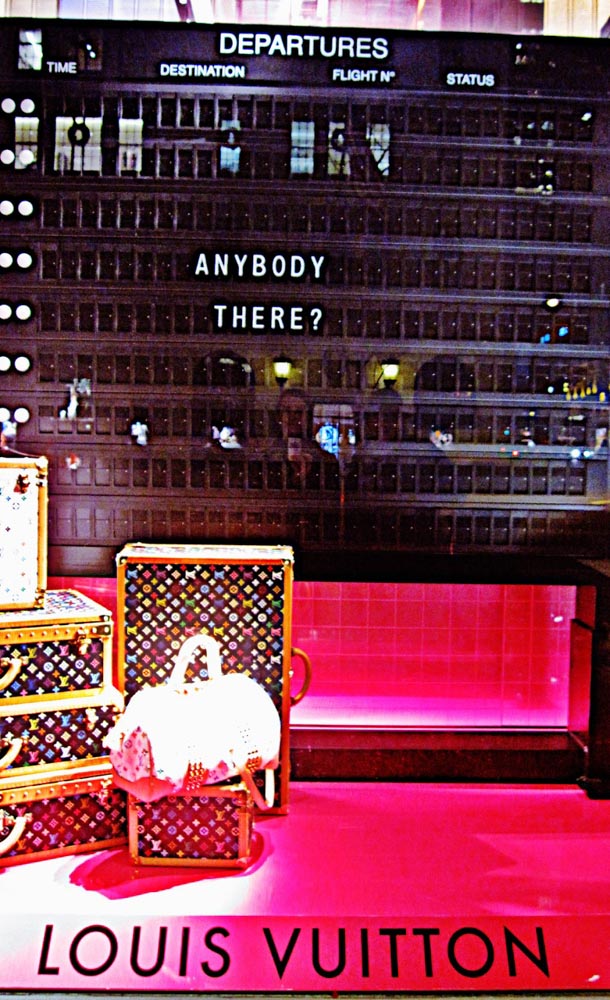
Luggage patterning becomes merchandising substrates.
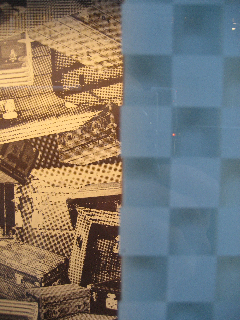
This double image references wall glass checkerboard with a collage wall paper—a code from the luggage.
Merchandising of product and patterning—one language becomes another.
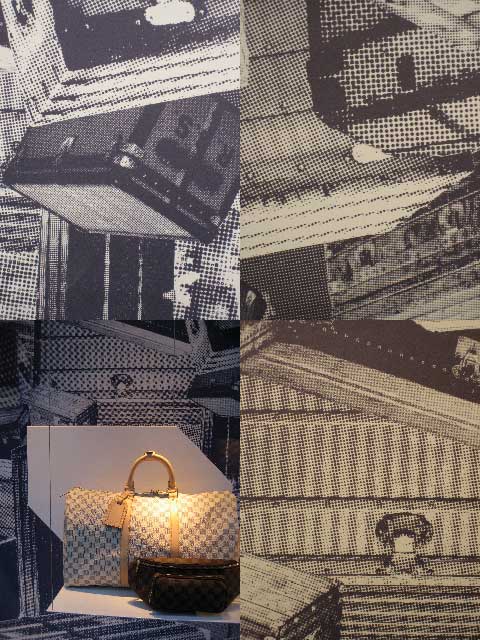
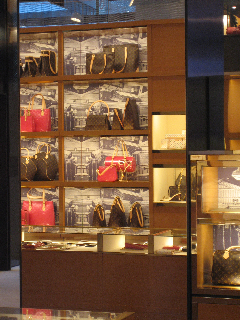
The geometry of wall treatments becomes a diffusion of the brand language—
the code of the square, the checkerboard, the luggage treatments.
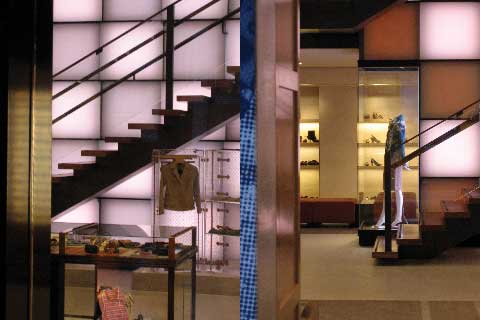
Merchandising design rhythms—Brandcode® becomes patterning visual display.
Shinkenchiku.net is the entity behind A+U | Architecture + Urbanism, one of the best periodicals on the planet for exploring trends in the best of the best of architectural strategy and exposition. Amazing—and sometimes unseen—structures abound in this collection, that dates back in a series to the coverage of the late 80s to the present time.
There are some renderings of relevance exploring the use of materials and patterning in treatments, for architecture, and below I’ve gathered some of these. Really, to deeply understand the work, I’ve tried to offer site links—a comprehensive online version for A+U doesn’t seem to exist.
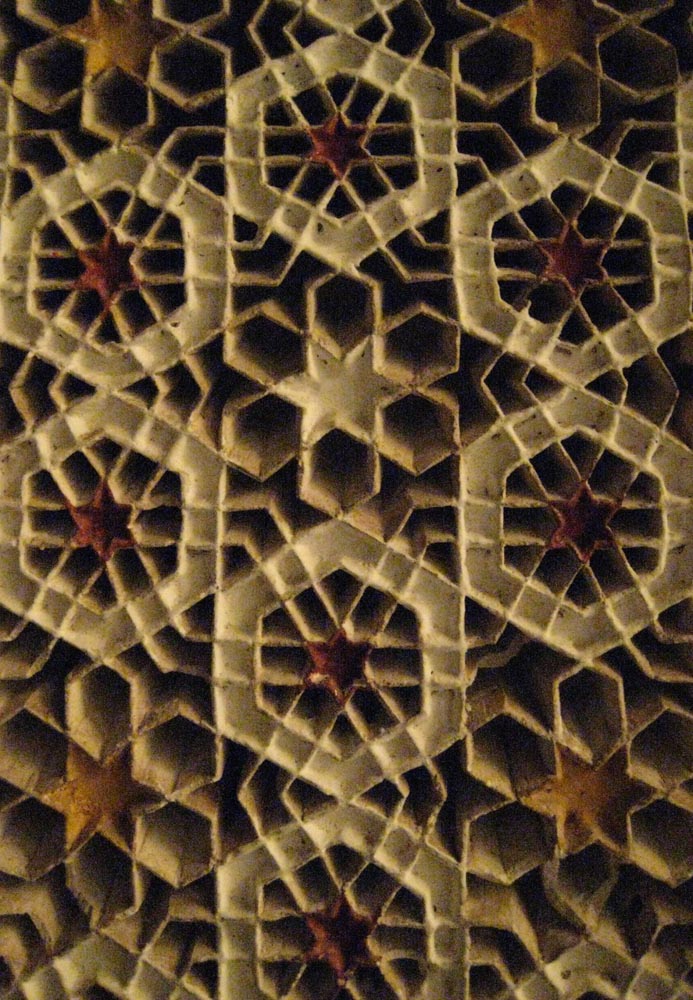
Patterning is a code—from the large to the impossibly small—it is about seeking rhythm—from one idea to another, from the story of a brand, a person, an inspiration—and how this ideation might be implemented in a manner that moves through the conceptions of place, in building on memory and extraordinary experience design—for the maker, the builder, and the experiencer. And patterns are beautiful.
We are wanderers looking for beauty.
The quest to sharing beauty.
The commitment to spreading beauty.
GIRVIN references on the integrative design of brand patterning:
GIRVIN’s Pattern Branding | Pattern Computer
Brandcoding
BrandCrowds, The symbolism of clouds, clumping and cumularity
Herzog & DeMeuron @ 40 Bond, Street Patterning
GIRVIN’s strategy against blandism
GIRVIN’s placemaking strategies for holistic experience design
Brand Patterning, Color, Identity Integrations
Hospitality Patterning
Global and retail design patterning
A “patterning” talk that I gave at FiRe [Future in Review]—Mark Anderson’s global tech conference on technology
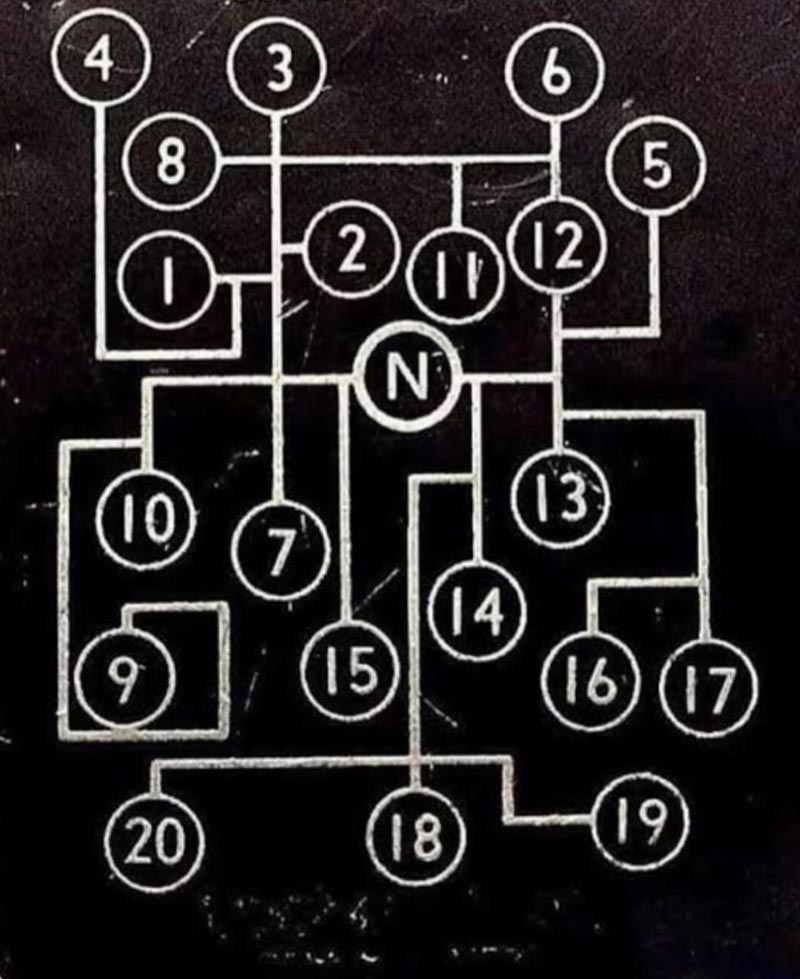
The Shift Pattern Sequence from a 1962 Freightliner Truck
What does pattern mean, to the history of the word?
That’s compelling, actually:
pattern (n.)
1324, “the original proposed to imitation; the archetype; that which is to be copied; an exemplar” [Johnson], from O.Fr. patron, from M.L. patronus (see patron).
Extended sense of “decorative design” first recorded 1582, from earlier sense of a “patron” as a model to be imitated. The difference in form and sense between patron and patternwasn’t firm till 1700s.
Meaning “model or design in dressmaking” (especially one of paper) is first recorded 1792, in Jane Austen. Verb phrase pattern after “take as a model” is from 1878.
Find your pattern.
Tim
Come. Co-create. Collaborate. Connect.
GIRVIN | Strategic Brands
Design for Hollywood | GIRVIN Digital
Destination Brands | Placemaking
––––––––––––––––––––––––––––––––––
We build
Follow Us:
Facebook LinkedIn Instagram Behance
Discover more from Girvin | Strategic Branding & Design
Subscribe to get the latest posts sent to your email.